A big thank you for my public.
Readers loved Esperança; find out why on the dedicated page.
ARTISTE – AUTRICE
signatures, masterclass, conferences, exhibition and book fair, conversations, readings
A big thank you for my public.
Readers loved Esperança; find out why on the dedicated page.
Take It Radio offers you two podcasts that I recently recorded. Episode 9 of the chronicle History of art and fake news and a bonus broadcasted for the spring of Poets festival.
To read the chronique (in french), visit the episode transcript page.
To read the poem (english version), visit the poetry page of the nameless land
Note: CLEMI, one of the sources of information for these articles, offers documentation this summer: Growing up in a connected world connected.
From June 19 to July 19, 2026, I am offering a reading of one of my poems online. You will find the description on the official website page of the national book center.
How can we not think about press freedom today? may 3rd has been proclaimed by the UN as World Press Freedom Day to celebrate: the fundamental principles of press freedom, to assess press freedom around the world, to defend media independence, and to pay tribute to journalists who have lost their lives in the line of duty. Listening to podcasts, reading newspapers, and staying informed through other formats via free and independent media are essential for maintaining our critical thinking skills. Long life for freedom !
Discover the article I wrote, interested in proposing me a contract ? please contact me.
For the Spring of Poets and World Poetry Day, escape for a few moments with a poem.
You can also read in your garden after visiting your public library or bookstore to extend this pleasant moment 🙂
Afterwards:
This afternoon, I read an article from the feminist revolutions journal *La Déferlante* to a young man. The article recounts the exile and oppression experienced by Bushra Alzoubi and how she returned to Syria to visit her sister, from whom she had lost contact. This article, along with photos, is in issue 21, page 26, February.

Discover the protagonists of my new book, soon to be published: what were their hopes, their doubts, their desire to regain freedom? How did this idea come about? Esperança is a bilingual play; come and discover the writing process in a great place to read. One of my inspiration source was the play “the tempest” by William Shakespeare. Program
Text that I wrote about this event and a photo :
Social media of the public library.
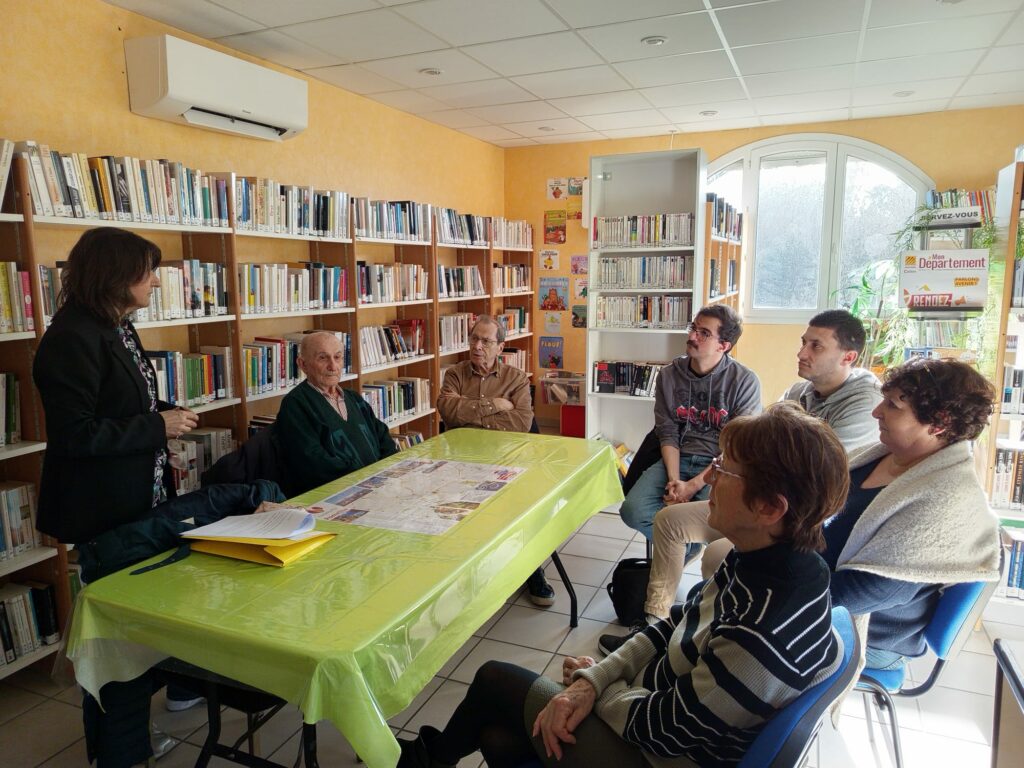
It was a wonderful day at the Ponteilla-Nyls library. I presented my new book, Esperança, exclusively. It exists in two versions, one in French and one in English. This play is set in a historical context. During the discussion, I outlined the steps I had taken, from inspiration to research and then to writing. A member of the audience read an excerpt for the 10th annual Nights of Reading. Esperança will be published very soon, and several copies have already been pre-ordered.
Find my great and new radio chronicle : “fake news and history of art”, podcasts would be broadcast with take it radio for the nights of reading (edition ten) organised with the center national of the book.Programm.
Take It Radio is an intergenerational web radio station, some of whose segments are aimed at young people in the Pyrénées-Orientales (P.O.) and cultural stakeholders. Its online presence is organized by the Fédération Départementale des Foyers Ruraux 66.
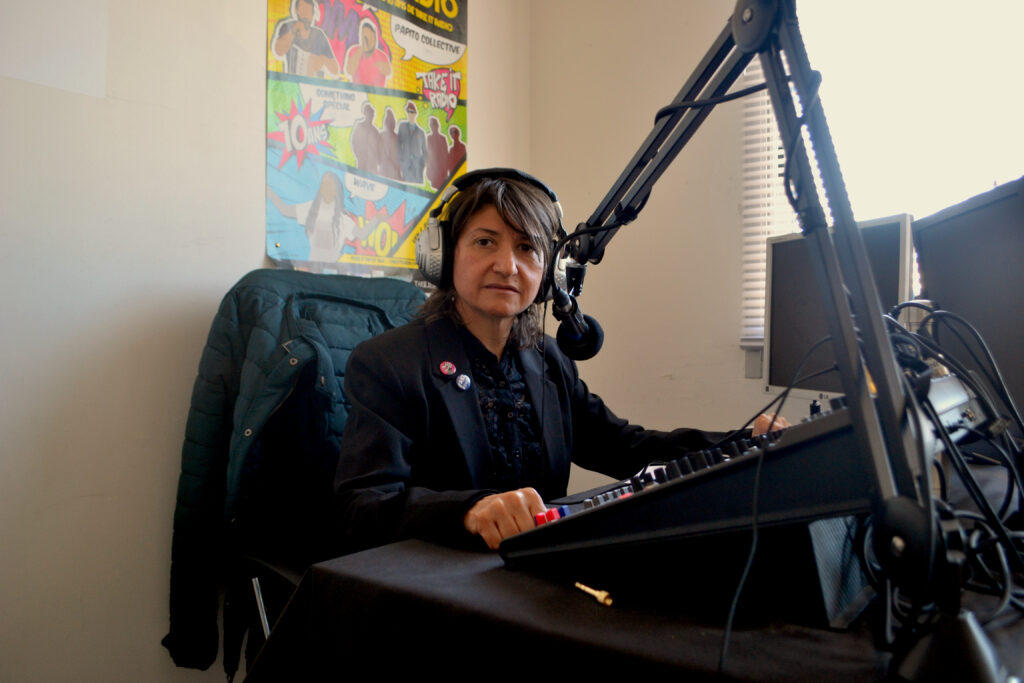
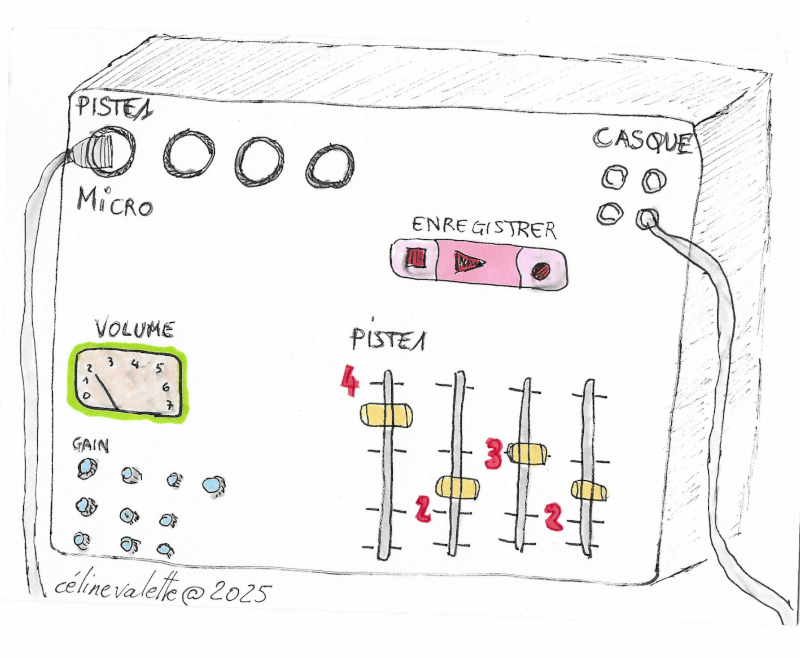
This morning with the team of take it studio (radio of the fédération des foyers ruraux) we recorded my chronicle fake news and history of arts, a big thank you everyone for this great time. This chronicle will be broadcast soon and you will be informed about it. This is a drawing that I created :
When creating characters, whether for a novel or a play, two notions are important: observation and empathy. It is possible to imagine the physique and character traits beforehand, however, observing reality allows you to create very realistic fictional characters. Where are they heading? what pushes them to act?
Likewise, asking yourself what the characters feel, making them act according to their values to maintain a certain logic, all of this is part of what we can call empathy for the characters we create. Personally, I have always really liked the characters in my stories and when I had to create “bad guys” it was never easy and I often write them a past that helps enlighten readers.
Do you want to know more ? register to my masterclass.
This summer, I realised an interview about the international final of boccia 2025, an olympic sport from handisport category.
You can call upon my skills, knowledges.
Discover or rediscover boccia by reading on this page my article