I joined scribophile community.
Come to discuss with us.

ARTISTE – AUTRICE
tips about a creation of a plot, characters, places and other information.
As an artist, I am crossed by all kinds of emotions which interact on my job. This is not just about looking for inspiration and writing hundreds of books without interruption.
The world around me is important.
Today, I heard a program on the radio on France culture and which quoted a group of several authors in the United Kingdom. Its objective was to question the various publishing companies on their ability to control printing in order to move towards a more responsible use of paper.
This environmental issue had already worried me during the first COVID epidemic when I started my professional activity. And, I was indeed not the only one. Conferences on the malaise of authors facing their profession and the possible impacts on the planet had taken place at the BnF.
My comments are not those of all the authors, they engage only myself.
In a previous article, I proposed some lines of thought on a changing profession and they were as follows:
Currently, there is a disparity between accessing and purchasing a physical book and a digital book. In the majority of cases, for digital it is access to online content under conditions clearly defined by the broadcaster. Which wouldn’t be a problem if we were talking about a reading subscription rather than a book purchase. In the case of a file purchase for the digital version of the book, if it is done without D.R.M, the author may be exposed to a sharing of the book without receiving the benefits, but this is not certain. In order not to hamper individual freedom, having a digital file in an open format is fairer. It is up to us to make the public aware of our working conditions as artists and our method of remuneration.
In the context of printing on demand, if the choice of the type of paper is recycled, certain labels should make it possible to ensure that it has not been treated beforehand and that the forest has not been over exploited. . As for the use of vegetable inks, they can prove to be an alternative to think about.
It has always seemed obvious to me that it is better to favor quality over quantity and that in any activity.
As an author, I try to act at my level by having a human and logical rhythm of artistic creativity, by talking about these ideas around me, thus proposing the result of my reflections. Everyone is free to use them.
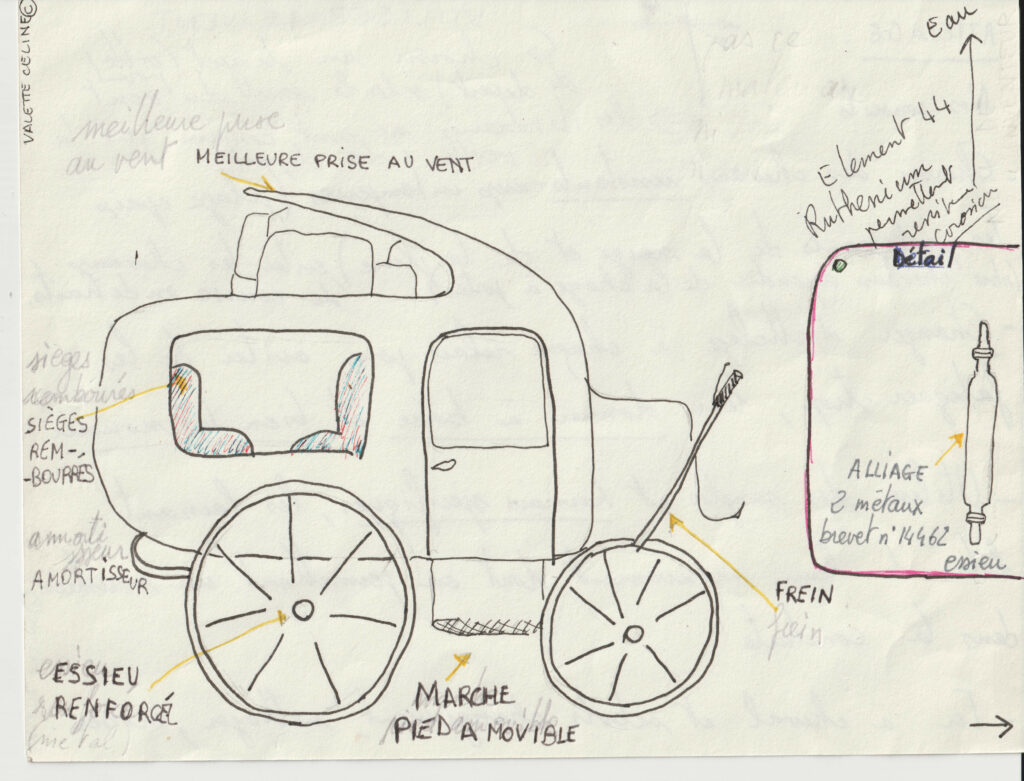
I told you about fighting against the lack of inspiration. Here are some tips. Whenever I got stuck on an idea, I played music and drew. For example, I was making improvements to the stagecoach by representing it. This allowed me to give a certain originality to it. I listened to the training I had followed, I reviewed my notes. If nothing helped it meant that an element did not correspond to the writing of the book. This can happen if you control your characters too much. They have their own existence within the book. The story freezes when one or more characters act opposite to their personality.
This text is an extract of my masterclass
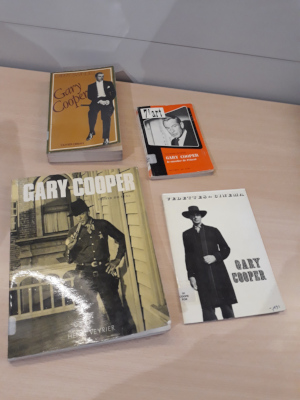
The classics of Hollywood cinema influenced the writing of my fiction Duel à Albi.
In the story, I refer to several films such as:
– Morocco
– The Devil’s Garden
– Friendly persuasion
The script of some films is inspired by literature.
– For Whom the Bell Tolls based on Ernest Hemingway’s novel
– Peter Ibbetson based on the novel by George Dumaurier
I chose evocative titles in line with the sassy tone of the dialogue. They thus participate in creating the fantastic dimension in which I wanted to immerse my short story and the public.
For the documentation part, I made an appointment at a film library to read some extracts from books which gave me some information.

Thank you to the film libray Jean Vigo.

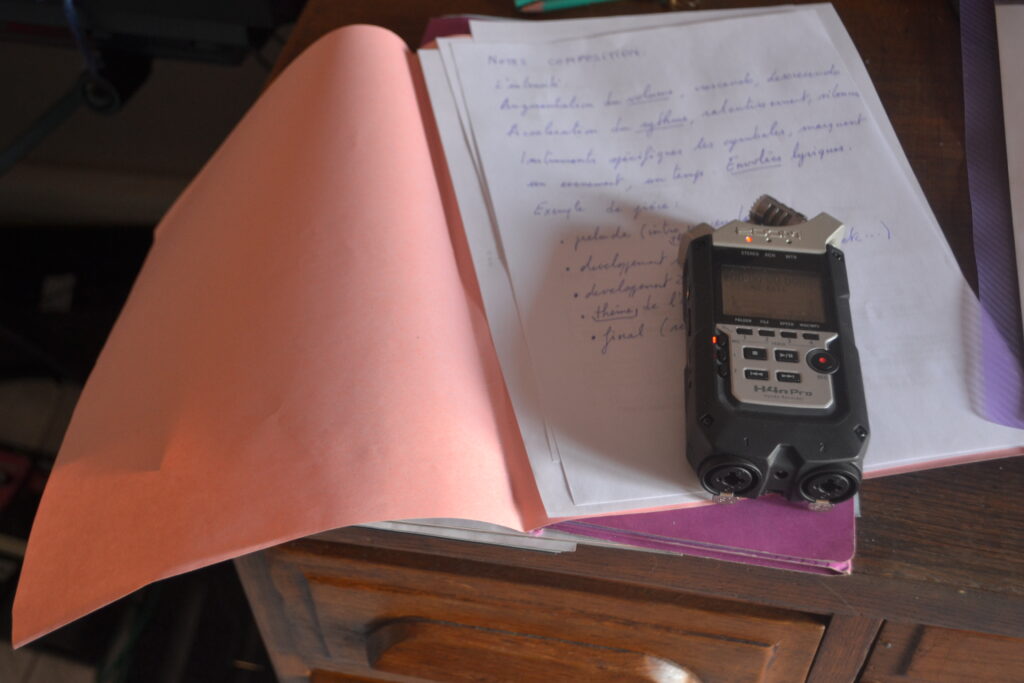
Readers often ask questions related to our business. Each author has her own path and techniques. For my part, I often write my ideas on sheets or a notebook without lines. This allows me to move them more easily. On the other hand, when I write, the computer is my main tool. That said, I also sometimes use a recorder so as not to lose musical ideas that I use (or not) as needed. The photo I posted today corresponds to the project I’m working on. For this one I called on other professionals to finalize certain parts (enlargements, rereading translation, advice, asked actors their opinion to make a proposition and to play)
As I most certainly said before, when writing my book Fantastic L.A. I drew certain elements and added details that allowed me to move forward in the writing. Today I present to you the stagecoach of Fantastic L.A.

Itinerary :
Use the wind. Choose a route with a starting point in the direction of the wind. The routes are not known until the day before departure.
1880
Equipage :
– Choose horses resistant to bad weather (thick coat protecting them from snow and rain).
– Change the hitch at each belay to avoid tiring the horses. Give them water and feed them well.
– Use specific harnesses and straps leaving them free to move while allowing support while driving.
– Horseshoes and hooves. Change, clean, brush.
I am pleased to announce the launch of my new Masterclass.
I am pleased to announce my new Masterclass. Selected by the C.N.L on August 24, 2022, sessions are still available for the months of October and November. I will soon give you news about the future 2023 session.
To find out more, go to this page.
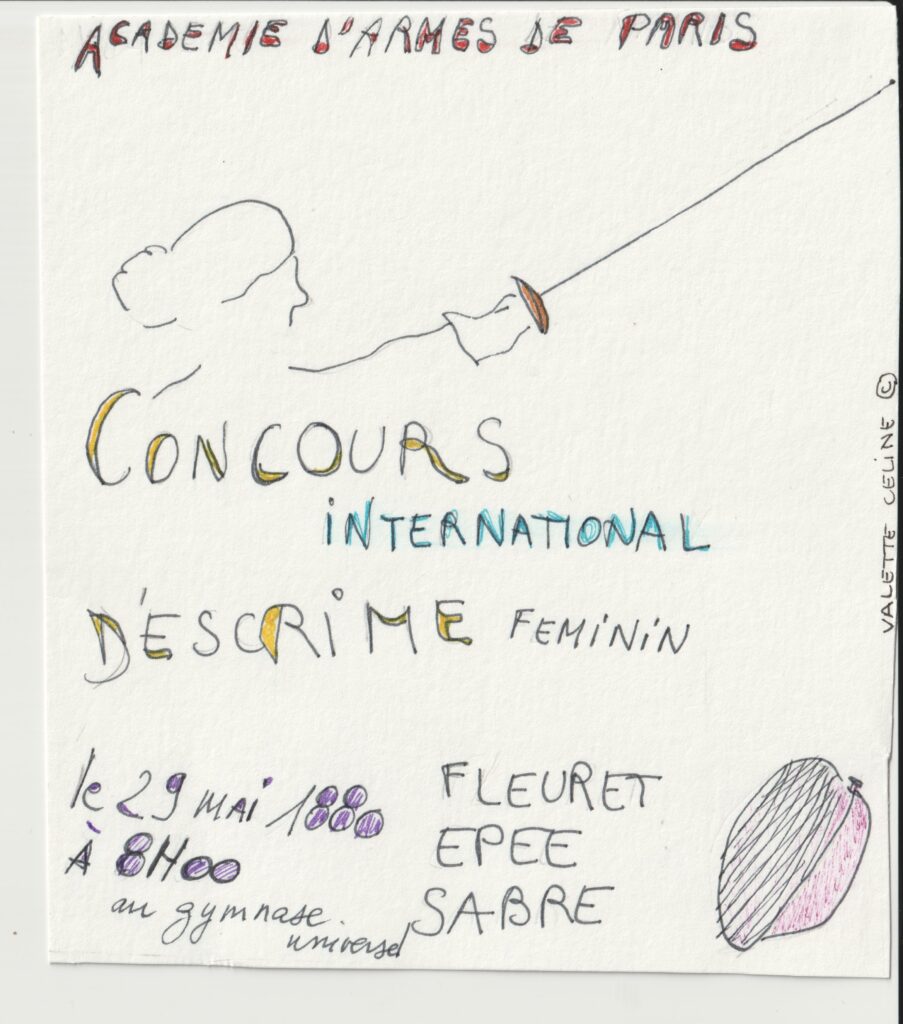
During the writing process of Fantastic L.A, I drew sometimes elements of the story. To create the fictional character of Hortensia Tercero, I was inspired by the first women’s fencing competitions. The action takes place in the 19th century. Hortensia decides to take a stage coach, firmly deciding to go to the place.

Internet link :
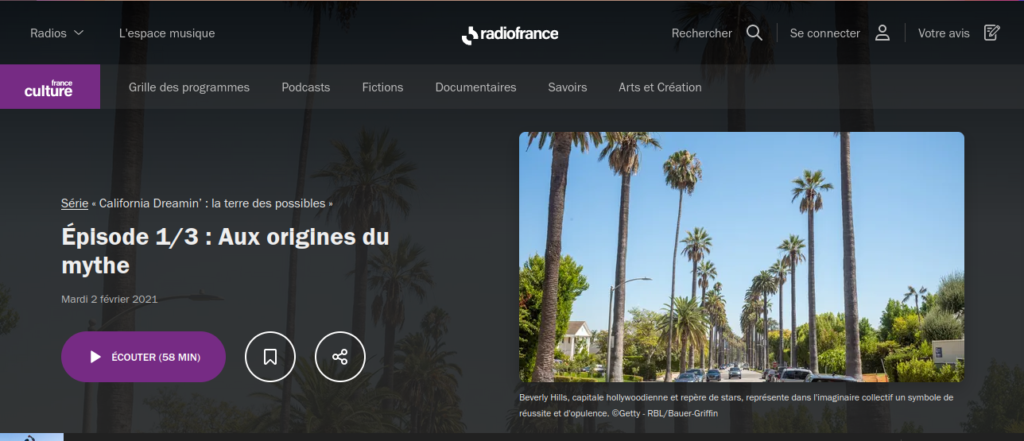
Radio is an important vector of information and culture. Before writing the first draft of my book Fantastic L.A, I supplemented my research by reading books on California history, articles and also by listening to the California Dreamin podcast series.

Internet link :

The plot of my new book named Fantastic L.A takes place in Los Angeles. Because I never visited the city, I asked myself many questions about the history of L.A and the geography of its neighborhoods. I did not hesitate to seek advice from an artist living there. Pleasant Gehman has drew up a plan and answered my questions in writing. Collaborating with other professionals is a rewarding experience. Similarly, when I was researching numismatic, I called on a specialist in this field who worked in a Museum of the Pyrénées-Orientales. This allowed me to have a precise idea on the historical level. Then for the plot part, I let my imagination free to plunge the readers with me into a fantastic universe.
Internet links :