Internet allows you to research a lot of data and to save time. However, they need to be verified for each project and to go deeper is necessary. Very often, I follow specific training courses. Let’s take the example of detective stories and mysteries. Taking a few forensic science courses gave me some insights. Just like listening to authors of historical fiction expose their problems of writing. I have always thought that being opened to new knowledge and perfecting oneself in one’s profession were essential. Exactly as to teach them afterwards. All these exchanges are humanly enlightening.
Using your senses
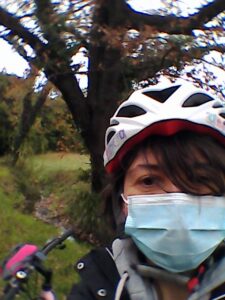
Very often, it is our visual sense that is the most solicited. As far as I’m concerned, I like to experience the following from time to time during a walk: I watch and describe the landscape. It is a field where the hay has been cut, all around the trees and in the sky the birds. Then I close my eyes and listen. I hear their singing, the sound of a vehicle in the distance, the blowing of the wind.
Then I feel a cool breeze on my skin that gives me goosebumps.
Now I smell the multiple smells all around.
Then I touch a blade of grass. What gives me the most difficulty is the use of taste so I drink some water that I brought on my bike.
To improve the description of a text, I like to perform this exercise. It is possible for any chapter or scene.

Improvisation
When I write improvisation grids for the guitar, I use libre office. Sometimes I need to draw chords diagrams. There is a useful extension that I would like to share with you:
https://extensions.libreoffice.org/en/extensions/show/chorddiagrams
The evolution of writing
As a professional, I think about the evolution of writing. And, of course, I ask myself all kind of questions to which I try to find a solution. They are not necessarily the best but having a vision of the future allow you to anticipate.
Here are three issues we should think about :
As an author we can facilitate accessibility by offering files whose content is structured through the use of style sheets. Publishers will then be able to continue the accessibility process.
Regarding the recycling of paper, there are labels that are more compliant than others, similarly vegetable inks are possible. That said, print on demand seems an alternative.
Finally, DRM does not seem to me to promote the dissemination of a book for the public. Similarly, the multiplicity of formats according to a particular type of equipment restricts reading.
Historical fiction : searching information
When you have an idea about a subject that requires accurate historical information, it’s not always easy to know where to search. Here are some tips that I learned. They could be useful to you. The documents come from several types and are not all in the same place.
People houses:
Letters, intimate correspondence. Testimonials from the era or descendants (stories passed down within the family or heard)
Archives: (national archives etc.)
Medical reports
Minutes
Birth certificates
Period newspapers
Theses: (specialized websites, universities etc.)
History student theses
Books :
Current authors who have written on or around the same topic
Local fund:
Public Library
Alias or not ?
When you began to write to publish, this question comes to you. What are the reasons for using an alias? I think, they are of two kinds. The first is to preserve your anonymity, the other one to create a second identity.
There are situations where authors feel a danger by publishing under their real name. Let’s take the case of the denunciation of illegal or violent acts through a book, thus providing testimony as a victim (illicit activities within a company, by example).
In a different case, opting for a pen name is also the possibility of publishing texts in a new style. Some authors do this with the aim of testing a new audience. For my part, I wrote a first short story under a pseudonym. I didn’t want to reveal my name when posting at that time. Then I realized that I felt it was important for me Several years later, I replaced the pseudonym (used for my novel) with one of my surnames.
Add metadata
To wait from publishers is very long. Which has its advantages and disadvantages. Waiting feeds anxiety but it’s also a good time to communicate about your work, learn new skills and explore the different possibilities of your future book. For me, that’s what I’m doing right now.
During the creative process, I like to explore the arts. Playing music or/and drawing allows me to come back to my book.
This week I scanned drawings and learned how to embed metadata into the file. I thought sharing this tip with you might help you too.
Metadata allows you to add information to an image: the title of the image, the name of the author, the year, rights etc. which may be useful. If you want to do this, you will need to use photo manipulation software. For my part, I chose Gimp. To add metadata, open your drawing with the software, go to the image menu and click on add metadata. Save the file.
Playing with text
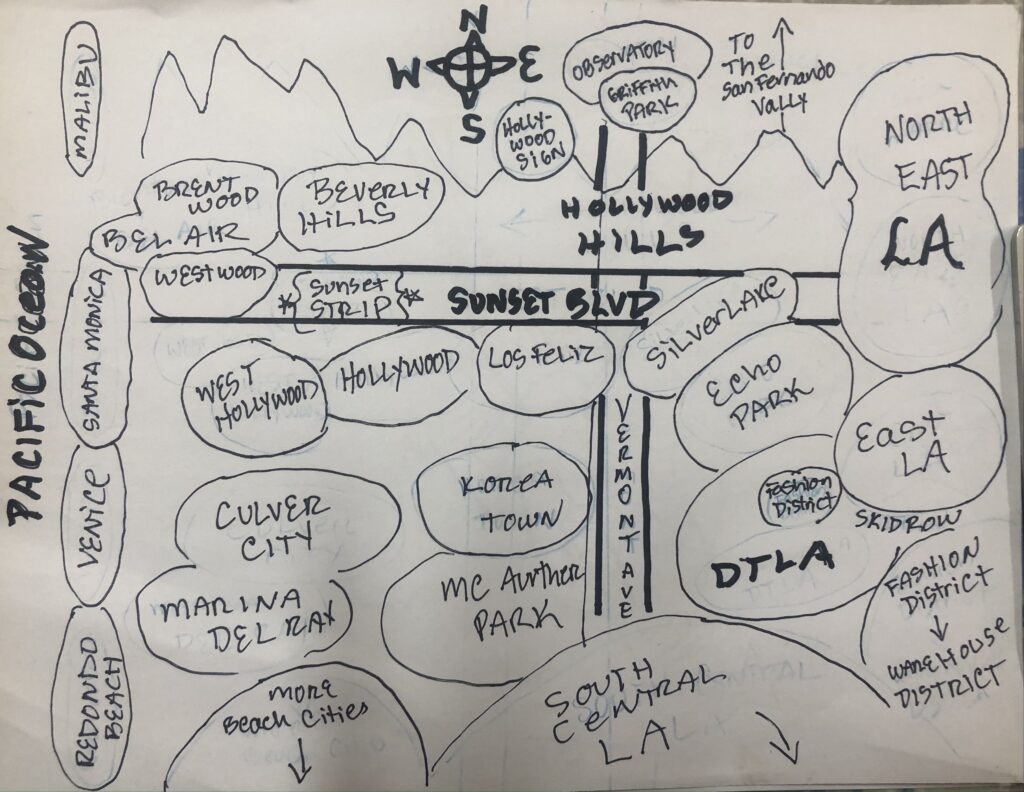
When I wrote Fantastic L.A, I played a lot with the characters and all the objects used to solve the riddle. For example, crosswords. While thinking about them, I did some research and discovered the origin of the first crosswords. On the original document, definitions and a grid. In the center the word : fun (joy in French).
With the definitions of the original document that you will find at the end of my post, I wrote this short poem :
What we all should be ?
A daydream, a pigeon, a part of the ship
What artists learn to do ?
Opposed to less, exchanging the plurial of this
Link : article about Arthur Wynne.
Beta readers
Here is some news.
On December 30, I finish to write the first draft of my new fiction. It took me 1 year to make it. To begin, I chose an idea that I liked then I made historical researches of which I did not keep many elements. But, they contributed to nourish my inspiration to build an intrigue. When the first draft was finished, I asked some beta readers for their opinion. Which took me a week or two. It is important to give them enough time to read and to send their answers to the questions I asked. When this step was completed, I read the feedback carefully and took all constructive criticism into consideration. Which obviously required that I correct my first draft. Among the notes, some were too intrusive or didn’t go to the same direction than I wish for the book and I didn’t retained them. In a few days, I will send my book to several publishing companies. I would be lying to you if I told you that I do not feel a certain apprehension. But that’s a part of this project.
To follow your modifications

At the moment, I am correcting the first draft of my new book. Of course, I could have sent it to an editor and waited for a feedback. But before doing it, I preferred to reread, adding some details, making improvements.
The reason why I’m talking to you about this project today, is because I realized that there is a function on libre office, the text processor. This one allows you to track your version changes. You can go back or go to the next changes. Keeping a list of all your changes is always interesting.
Having said that, in writing this article I though back to a sentence I heard on the radio recently. It was about the necessary function of forgetting. Don’t we tend to want to save and classify everything before we’ve even lived these moments ? why ?
From a historical point of view, it is obvious that retaining the testimony and any other document from the past is important. However, not accepting that it is impossible to keep everything intact seems problematic to me. There will certainly be traces of some of the events of our existence, but not of every moment, as an individual, I have not considered spending too much of my time listing them. It makes me feel like I’m not living fully.